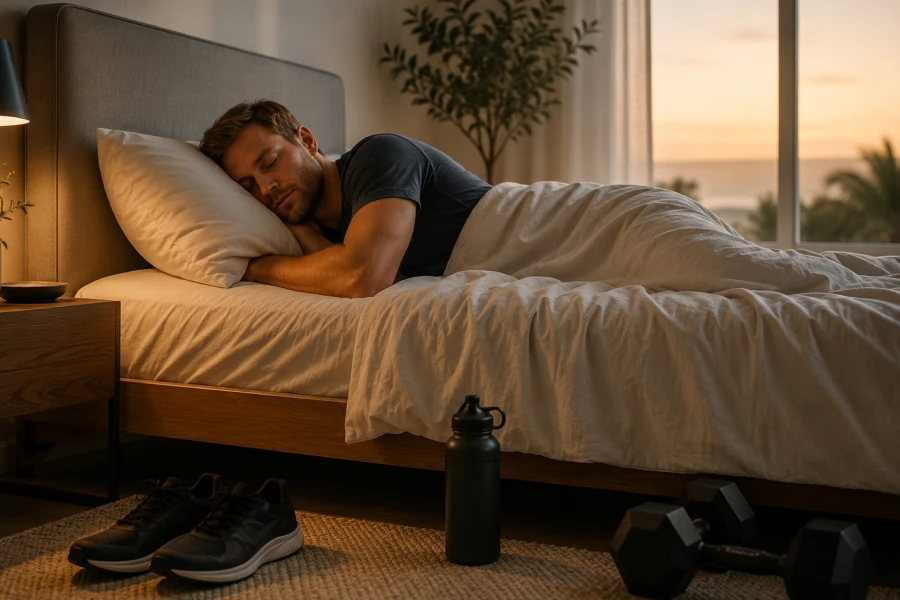
Many athletes track sets, miles, macros, and heart rate while overlooking the simplest recovery lever. Sleep and workout recovery belong together because training creates stress, and sleep helps the body adapt to it. Without enough quality rest, progress becomes harder to earn. Muscles may feel heavier. Motivation can drop. Reaction time may slow. Soreness can linger longer than expected. Better recovery does not always require adding more tools. Sometimes it begins with protecting the hours when the body repairs itself. For active people, sleep is not a passive break from training. It is part of the training cycle.
Training challenges tissue, energy systems, coordination, and focus. Sleep helps restore those systems. Sleep and workout recovery work together because adaptation happens after stress, not during it. A hard session creates the signal. Rest gives the body a chance to respond. The athlete recovery strategy approach helps people see rest as productive. This mindset matters for driven athletes. More work does not always create better results. Sometimes the missing improvement comes from deeper, steadier recovery.
Poor sleep changes how effort feels. A normal workout can seem unusually difficult. Coordination may feel less sharp. Mood can become more reactive. Hunger signals may change. The body also has less time to manage repair, immune function, and hormonal rhythm. Athletes often blame discipline when fatigue is the real issue. One bad night does not ruin progress. Repeated poor sleep creates a bigger problem. The body cannot adapt well when recovery keeps falling behind. Training quality eventually reflects recovery quality.
Sleep and workout recovery influence muscle repair through repeated nightly processes. The body uses rest to support tissue rebuilding, energy restoration, and nervous system balance. The muscle repair support plan can help athletes focus on the basics before chasing complicated fixes. Consistent sleep timing matters. A calmer evening routine matters. Nutrition and hydration also play supporting roles. Recovery improves when these pieces stop competing with each other. Muscle repair becomes more reliable when the whole routine supports rest.
A useful evening routine should reduce stimulation gradually. Bright screens, late caffeine, heavy stress, and rushed meals can all interfere with rest. Athletes need a transition from performance mode into recovery mode. That transition may include stretching, a warm shower, dimmer lights, or quiet reading. The exact routine should feel realistic. A complicated ritual usually fails during busy weeks. Simple cues work better when repeated. The body learns patterns over time. When evenings become steadier, sleep can become more dependable.
Sleep and workout recovery matter because performance depends on repeatability. One strong session means little if the next three suffer from fatigue. Athletes need enough recovery to train well again. The performance recovery routine helps connect daily rest with long-term results. Better sleep can support sharper focus, steadier pacing, and more controlled effort. It also helps athletes interpret feedback more accurately. When the body is rested, training data becomes easier to trust.
Recovery debt often appears through small signals first. Motivation drops. Warm-ups feel sluggish. Sleep becomes restless despite fatigue. Soreness lasts longer. Minor aches become louder. Athletes may feel irritable or unusually hungry. These signs deserve attention before performance declines. Adjusting training volume, bedtime, or rest days can prevent bigger setbacks. Recovery is not laziness. It is management. The earlier an athlete responds, the easier it becomes to maintain progress. Listening early protects the work already done.
Sleep and workout recovery can become a quiet advantage because many athletes underprioritize them. They search for harder plans while neglecting the foundation that makes hard plans useful. Better rest supports training quality, mood stability, decision-making, and adaptation. It also makes discipline easier because the body feels less depleted. Athletes do not need perfect sleep to benefit. They need consistent improvement. Protecting sleep creates a stronger base for every workout that follows. Over time, that base can separate steady progress from constant frustration.




Leave a comment