
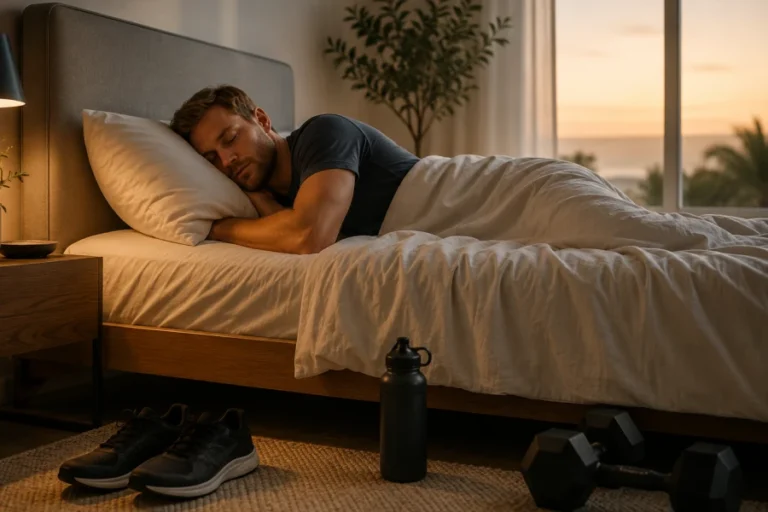
Muscles do not grow stronger during effort alone. Training creates stress, but recovery determines how the body responds. Muscle repair sleep gives active people the nightly window they need to rebuild, restore, and prepare. Without that window, soreness can linger and performance can flatten. Many athletes search for advanced recovery tools before protecting basic rest. That order often creates frustration. Sleep supports the repair process in a way no supplement or gadget can fully replace. Better nights make better training easier. When rest becomes intentional, hard work has a clearer path toward visible improvement.
Muscle repair sleep matters because exercise creates microscopic stress that needs recovery time. The body responds by rebuilding tissue and restoring readiness. This process works best when rest is consistent. The post-workout sleep recovery approach helps athletes place sleep near the center of their plan. A hard session without recovery can become accumulated fatigue. A hard session followed by good rest becomes more productive. The difference may not appear overnight, but it compounds across weeks.
Soreness is not always bad. It can reflect new effort, unfamiliar movement, or increased intensity. However, soreness that lasts too long can signal inadequate recovery. Sleep is one important part of that picture. Hydration, nutrition, stress, and training load also matter. Athletes should watch patterns rather than panic over one difficult day. If soreness keeps disrupting performance, the recovery plan needs attention. More effort may not solve the problem. Sometimes the body needs better conditions to complete the repair work already underway.
Muscle repair sleep works best inside a broader recovery routine. Evening calm, steady nutrition, hydration, and realistic training loads all support repair. The faster muscle recovery method begins with removing barriers to rest. Late caffeine, bright screens, and stressful tasks can interfere with sleep quality. A predictable wind-down helps the body shift toward repair. Athletes do not need elaborate rituals. They need repeatable cues that tell the body the demanding part of the day has ended.
Sleep cannot rescue a training plan that ignores capacity. Muscles need challenge, but they also need progression. Too much volume can overwhelm recovery. Too little challenge may limit adaptation. The right balance changes with experience, stress, age, and schedule. Athletes should adjust training when sleep becomes poor or soreness stays elevated. Deloads and lighter sessions can protect long-term gains. Recovery is not separate from programming. It is one of the signals that tells the program whether it is working.
Muscle repair sleep often reveals itself in the morning. A recovered athlete may feel steadier, clearer, and more willing to move. A poorly recovered athlete may wake stiff, foggy, or unusually unmotivated. The recovery and performance system helps connect those morning signals with smarter choices. Readiness should influence training intensity. Some days call for pushing. Others call for technique, mobility, or rest. Morning feedback becomes useful when athletes respond instead of ignoring it.
Simple habits can make sleep more dependable. A consistent bedtime window helps regulate rhythm. A cooler, darker room can support deeper rest. Earlier caffeine cutoffs may improve sleep quality. A calm pre-bed routine can reduce mental noise. These habits are not glamorous, but they work through repetition. Athletes should change one or two variables at a time. That makes results easier to notice. Small improvements can create meaningful differences across a training block. Better repair often begins with ordinary choices done consistently.
Muscle repair sleep is the quiet partner that makes visible effort matter. It supports tissue restoration, energy balance, mood, and readiness. Athletes who respect sleep often gain a clearer relationship with training. They understand when to push and when to recover. They also avoid treating fatigue as a character flaw. Progress requires stress, but it also requires response. Sleep gives the body space to answer the work. When that space is protected, training feels less like a grind and more like a system.



Leave a comment